Round Midnight
My Late Night Gallery
Andrew Rangell
Steinway & Sons is thrilled to release Andrew Rangell's most recent addition to his large and diverse collection of recordings. From the chromatic poetry of William Tisdall’s Pavane and the concentrated intimacy of Stefan Wolpe’s Pastorale to the imaginative virtuosity of Ravel’s Jeux d'eau and the exuberant hilarity of David Feurzeig's Stride Rite, Round Midnight is a program of discovery, contrast and expressive depth.
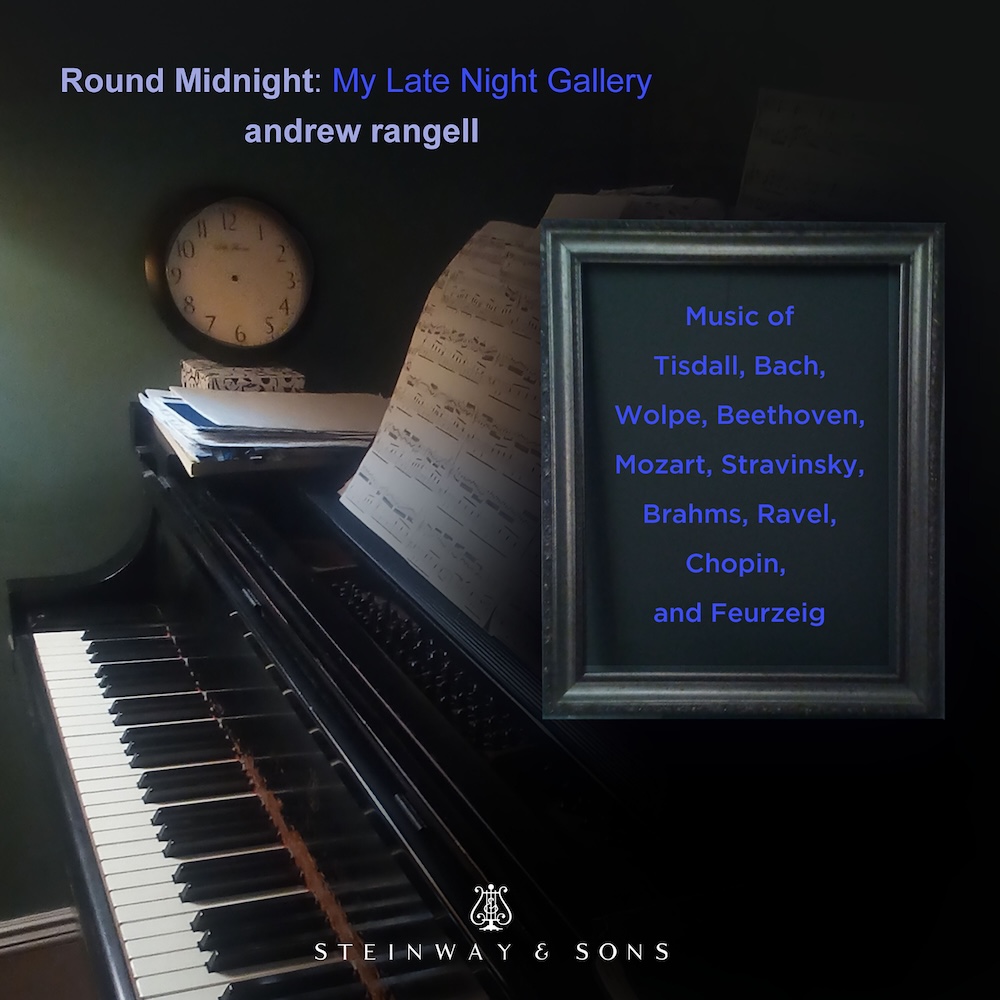
On January 2, 2026 Steinway & Sons releases Round Midnight: My Late Night Gallery / Andrew Rangell (STNS 30256). In his program notes for the album, Mr. Rangell writes:
The works comprising this recital are (with two brash exceptions) rather intimate and inward-looking. Some are unfamiliar as well, being outside of the repertorial mainstream. For me all these pieces tend to bear out Frances Bacon's dictum: “There is no excellent beauty that hath not some strangeness in the proportion." This applies, I feel, even to the better known works, but is perhaps heightened in one's experience of the newly encountered: Tisdall, Wolpe, Bach's Duet, Beethoven's Prelude, Brahms transcriptions, and even Mozart's peculiar and powerful Fantasy and Fugue.
A few facts and observations follow.
Almost nothing is known about William Tisdall ( b.1570?), unlike his celebrated contemporaries Byrd, Gibbons, Bull, and others of the English Virginalist School. Chromatic clashes saturate this poignant, almost dream-like pavane.
Bach published four "Duets" in volume three (1735) of his four volume "Keyboard Practice" (a compendium which includes the Partitas, Goldberg Variations, and other works). They are extended, playfully erudite, two-part inventions. The E minor is a heady blend of chromaticism, off-beat rhythms, and scalar patterns in strict canon.
Stefan Wolpe's 1941 Pastorale was dedicated to the pianist Jack Maxin (a youngster of twelve at the time) who later taught at the New England Conservatory for many years. This concentrated gem begins as a two-part invention, yet blossoms unexpectedly into full throated song...
The present arrangement of the plaintive, gently agitated "poco allegretto" movement from Brahms' G major viola quintet rests on a contemporaneous arrangement by Grützmacher. For me it is a special joy to render this heartfelt piece on piano. In 1896 Brahms composed his final work, Eleven Chorale-preludes, Op. 122. Number eight, "Es ist ein Ros' entsprungen" (A Rose Breaks into Bloom) was transcribed, along with several others, for piano by Busoni. (It's opening notes instantly call to mind Nat Cole's hit tune "Mona Lisa"....!) Opp. 76 No. 4, 117 No. 2, and 116 No. 5 are among Brahms' more introspective intermezzi, the latter being certainly the composer's most enigmatic.
Beethoven's F minor prelude, practically unknown, while certainly in print, creates an improvisation in Bachian texture, modest but possessing its own aura and sense of purpose. A bagatelle like no other.
Also seeming to stand apart is Mozart's C major Fantasy and Fugue, an intense and highly uncharacteristic creation of its maker. The fantasy's restless insistence is "Baroque" yet stylistically difficult to pinpoint. Brusque and compact, the fugue is bouncily Handellian, while peppered with dissonance. And it pulls out all the contrapuntal stops. In toto, this is a singular production!
No one but Chopin (only twenty-one when his early B major nocturne was written) could have conjured the particular lilting chromatic melancholy of the opening music, which enfolds a darkly turbulent contrasting section in B minor. A dreamily delicate coda concludes this perfect piece.
Ravel was, to a degree, Chopin's 20th century counterpart, at least where the piano is concerned. His Pavane for a Dead Princess (perhaps even better known in its orchestral version) and Jeux d'eau, both early works, exhibit qualities of fastidious craft, balance, and striking originality. The Pavane is a magical fusion of the formal and the intimate, an intersection which suited Ravel's imagination wonderfully. An inward dimension, sometimes overlooked, seems to me always present in the imaginative virtuosity of Jeux d'eau (as in his later Ondine). Again, a double-edged achievement.
It is reported that Stravinsky's Piano-Rag Music was the composer's response to being shown (by Ansermet, in Switzerland, 1919) sheet music of American ragtime. A brilliant, wicked and highly un-American response, to be sure! What goes around comes around, they say, and David Feurzeig's riposte to Stravinsky, Stride-Rite, takes snippets from "The Rite..." insistently and hilariously Americanizing them. TOUCHÉ!
— Andrew Rangell
“Rangell’s approach to the music is deeply personal, individual but never eccentric, sensitive to all the music’s highly varied needs, technically precise and artistically polished.”
Washington Post
Album Credits
Round Midnight: My Late Night Gallery / Andrew Rangell STNS 30256
Release Date: 01/02/2026
Recorded May 25-26, 2025 at the Shalin Liu Performance Center, Rockport, Massachusetts
Producer: Andrew Rangell
Recording/Mastering/Editing: Luke Damrosch
Piano Technician: Christine Lovgren
Piano: Steinway Model D #586518 (New York)
Executive Producer: Jon Feidner
Art Direction: Jackie Fugere
Design: Cover to Cover Design, Anilda Carrasquillo
Cover Photo: Andrew Rangell
Project Coordinator: Renée Oakford
About the Artist
Round Midnight is Andrew Rangell's most recent addition to a very large and diverse collection of recordings documenting this pianist's musical journey of four decades. At its center is a comprehensive, ever-probing, imaginative exploration of all of Bach's major harpsichord works and of most Beethoven sonatas, Diabelli variations, and fascinating lesser works. Over the years, Mr. Rangell has lovingly interpreted repertoire ranging from Sweelinck, Gibbons, Farnaby, and Froberger to 20th century voices such as Ives, Nielsen, Enescu, Schoenberg, Stravinsky, Janacek, Mompou, and many others. Not to mention composers working today.
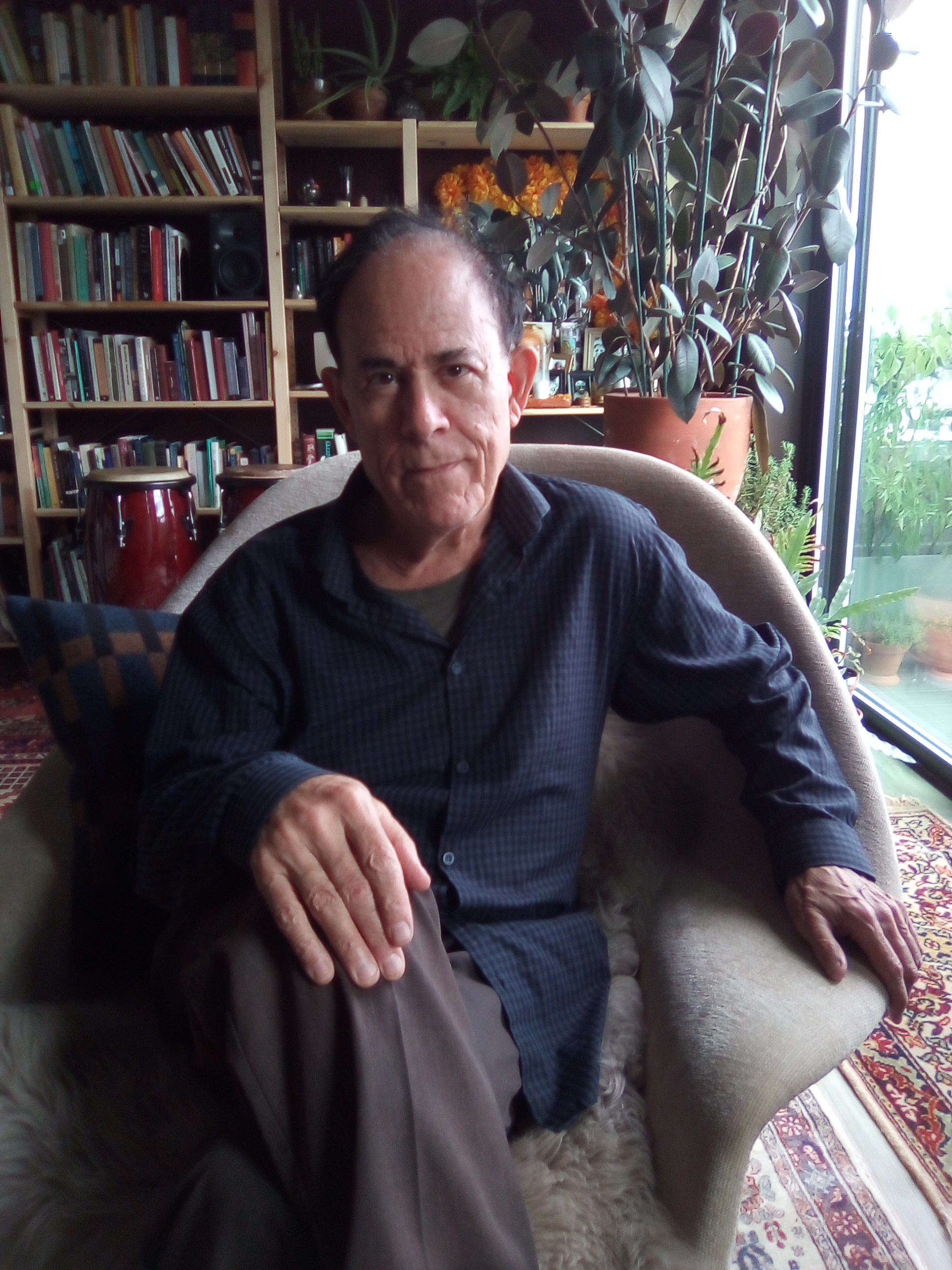
Andrew Rangell made his New York debut as winner of the Malraux Award of the Concert Artists’ Guild, and has since performed and lectured throughout the United States, and in Europe, Israel, and China. He has also taught on the faculties of Dartmouth, Middlebury, and Tufts University. In the 1980s, already recognized as a distinctive recitalist and collaborative artist, Mr. Rangell gained national attention – and the award of an Avery Fisher Career Grant – for his vivid traversals of the complete Beethoven sonata-cycle in New York, Boston, Cleveland, Rochester, Denver, and other U.S. Cities. A hand injury sustained in 1991 forced Mr. Rangell to gradually alter the trajectory of his career, and eventually to place his highest priority on recording. In a different area, Steinway has made available 3 music videos created by Mr. Rangell which integrate his talents as author, illustrator, narrator and pianist. They are: Sammy Snake’s Lucky Day, What Sal Heard and The Story of Peter Pajamas, and they can be found on YouTube.
About Steinway & Sons label
The STEINWAY & SONS music label produces exceptional albums of solo piano music across all genres. The label — a division of STEINWAY & SONS, maker of the world’s finest pianos — is a perfect vessel for producing the finest quality recordings by some of the most talented pianists in the world.

