Mozart in Schloss Eberstall
Katie Mahan
For Katie Mahan’s newest Steinway & Sons offering, she is joined by the Mozarteum Quartett and double bassist Martin Hinterholzer in a recreation of an intimate 18th-century chamber music evening.
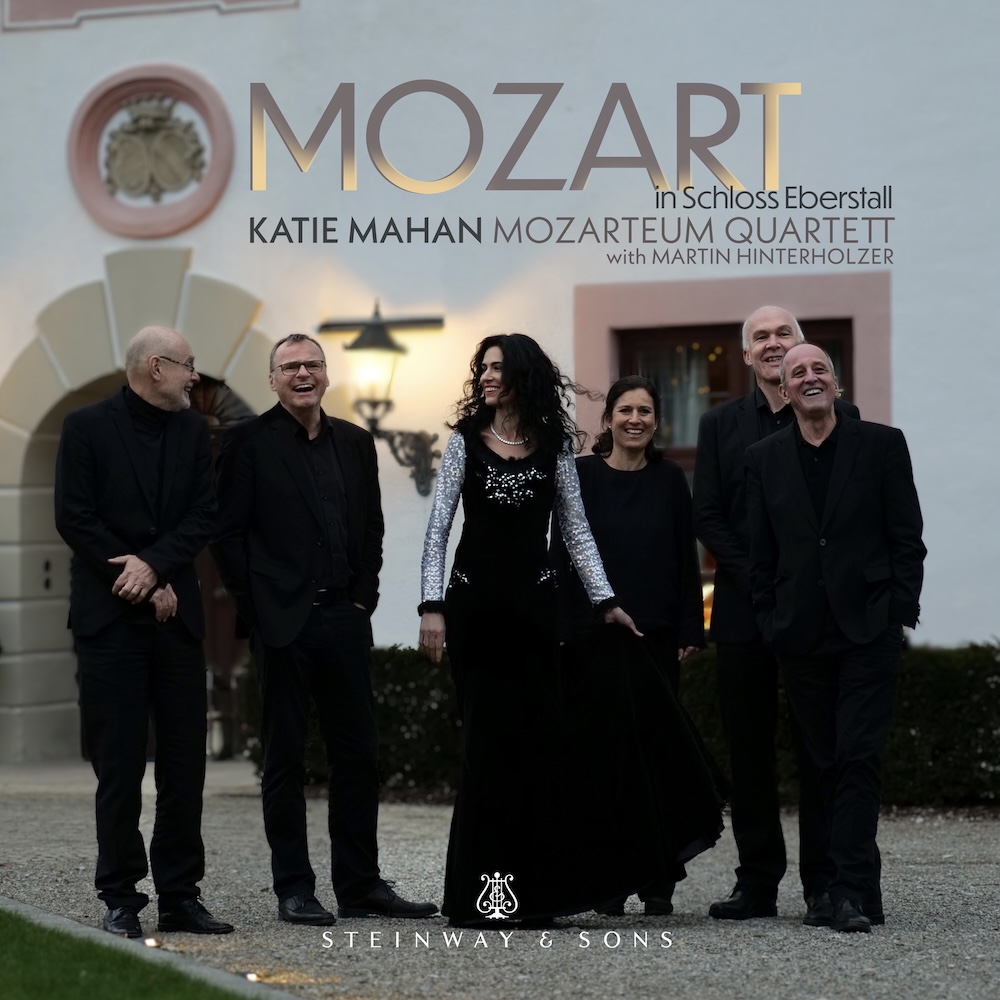
Katie Mahan releases her newest STEINWAY & SONS album, Mozart in Schloss Eberstall (STNS 30253) on April 3, 2026. Recorded before a small audience at the historic Schloss Eberstall in Bavaria, Mahan is joined by the Mozarteum Quartett and double bassist Martin Hinterholzer in Ignaz Lachner's brilliant arrangements of Mozart's dramatic Piano Concerto in D minor, K 466 and the monumental Piano Concerto in C major, K 503.
The program is complemented by solo piano works by Mozart, including the Overture to Die Zauberflöte (in an arrangement by Mahan), the dramatic C minor Fantasie and Sonata in C minor, K 475, the ethereal Adagio for Glass Harmonica, the beloved Variations on “Ah, vous dirai-je Maman” and his final piano sonata, K 576. Katie Mahan discusses the project in the album's liner notes:
“In the 18th and 19th centuries, attending a performance with full orchestra was a luxury enjoyed by very few. It was, therefore, common practice for composers to cater to the burgeoning middle class by creating chamber arrangements of their orchestral works and concerti which could be performed by small professional ensembles or amateur musicians in the drawing rooms of upper-class homes. Mozart himself arranged his piano concerti K 413-415 for piano a quattro (piano and string quartet), and had expressed interest in making similar arrangements of other piano concerti. Unfortunately he died before being able to proceed with the arrangements. However, as the practice of arranging large-scale works for small ensembles remained firmly in vogue in the first half of the 19th century, composers like Mozart's pupil Johann Nepomuk Hummel and the German composer and conductor Ignaz Lachner devoted themselves to the task. Lachner, in particular, arranged nineteen of Mozart's piano concerti for chamber ensemble. These highly effective re-imaginings - which present the piano solo part in its original, unaltered form, and adapt Mozart's rich orchestration for a string quintet – are not only enjoyable works in their own right, but also offer a unique insight as to how Mozart, and his contemporaries, may have performed such works when a full orchestra was not on hand. For this recording, we have selected Lachner's arrangements of the Concerto in D minor, K 466 and the Concerto in C major, K 503, two of Mozart's most brilliant works in the genre.
Both concerti presented on this album were composed in Vienna between 1784 and 1786, a period of remarkable creativity for Mozart in which, at the height of his popularity as a keyboard virtuoso, the piano concerto occupied prime position in his compositional output. Over the course of this two year period, Mozart completed twelve piano concerti to perform at a series of subscription concerts known as "Akademien" which he financed and organized himself to build his career as a freelance musician in Vienna. The Akademien were presented on Friday evenings at the Mehlgrube Casino in Vienna for an audience that included prominent members of Viennese high society. The Concerto in D minor, K 466, undisputedly one of his most intimate, intense and emotionally powerful works, was completed on February 10, 1785 and premiered, with Mozart as soloist, the following day at the the first of his Akademien that season. The work met with immediate success and remained one of Mozart's most frequently performed concerti through the 19th century. The monumental Concerto in C major, K 503, the last of the twelve concerti Mozart composed for his Akademien, was completed on December 4, 1786, a mere two days before his "Prague" Symphony, K 504. Although today considered to be one of his greatest concerti, the work, which is characterized by unparalleled grandeur and structural brilliance, fell into oblivion after Mozart's death and it was not until the second half of the twentieth century that it gained acceptance into the standard repertoire.
On this album, we have tried to recreate the atmosphere of an intimate 18th-century Kammermusikabend. We selected Schloss Eberstall - a historic and privately owned castle in Bavaria dating to 1602 which originally belonged to the noble Eberstall family and later to Count Schenk von Stauffenberg - as our recording location, and in keeping with the spirit of a Kammermusikabend as it would have been enjoyed in Mozart's day, performed the works before a small audience assembled in the drawing room. In between the concerto sessions, I also performed a selection of Mozart's solo piano works for our small audience. My performances were captured on recording and are presented here on a second disc. The solo program begins with my own arrangement of the Overture to Die Zauberflöte, K. 620, Mozart's final opera and a timeless masterpiece which has fascinated me since my earliest childhood.
Following the Overture is the dramatic Fantasie and Sonata in C minor, K 475/457, two works dedicated to Mozart's pupil Maria Theresa von Trattner that were published together as a set in 1785, and which have been part of my repertoire for more than two decades. Presented next are two rarely played miniatures, the ethereal Adagio for Glass Harmonica in C major K 365/617a composed in 1791 for the blind virtuoso Marianne Kirchgessner and the humorous Marche funèbre del Signor Maestro Contrapunto, K. 453a composed in 1784 as a little joke for Mozart's student Barbara Ployer. To complete the program is the delightful and ever popular Variations on "Ah, vous dirai-je Maman," K 265 and the Sonata in D major, K 576, Mozart's final sonata for the piano which, although believed to have been part of a commissioned set of six "easy" sonatas for the Princess Friederike of Prussia, ranks among his most technically challenging and brilliant sonatas. Although all of the works presented on the present album are rightfully at home in a large concert hall, the re-adaptation to the more intimate realm of a chamber music setting leaves the expressive power, grace, freshness and eloquence of the music unchallenged while simultaneously offering an endearing glimpse into another time and its culture.”
— Katie Mahan
“I even believe that these recordings of Concertos K. 466 and 503 are among the best of these arrangements. This is due to the total harmony and the inspired dialogue between the strings and the pianist, as well as her very spontaneous and rhetorically accentuated playing.
The Concerto K. 4366 is particularly dramatic and energetic in the outer movements, not least due to Katie Mahan’s highly expressive playing. The 25th Concerto is also magnificently executed.”
Pizzicato
“This delightful two-disc set presents a thoughtfully curated program...Mahan and the Mozarteum Quartett perform all of these pieces with both bravura and taste... I was particularly impressed by Mahan’s arrangement of the Magic Flute overture. Any library that supports musicology and orchestration curricula should seriously consider adding this recording.”
CD Hotlist
Album Credits
Mozart in Schloss Eberstall / Katie Mahan, Martin Hinterholzer, Mozarteum Quartett • STNS 30253
Release Date: 04/03/2026
Recorded December 12-13, 2024 at Schloss Eberstall, Bavaria.
Produced by Emil Berliner Studios, GmbH, Berlin
Recording Engineer: Rainer Maillard
Mixing and Mastering: Rainer Maillard
Editor: Katie Mahan
Executive Producers: Eric Feidner, Jon Feidner
Art Direction: Katie Mahan
Photos: Aron Dachs
Project Coordinator: Renée Oakford
Piano: Steinway Model D #615556 (Hamburg)
About the Artists
Praised as “one of the most outstanding talents coming up today,” American pianist Katie Mahan is capturing the attention of audiences throughout the world for her innovative musical personality, poetic interpretations, and graceful, charming stage presence. She possesses an unquestioned technical mastery combined with a kaleidoscopic palate of tone colors, and has been recognized as “a daring and innovative performer.” A multi-faceted artist for whom music is an endless passion, Katie is at home in a broad repertoire, and is particularly distinguished as an interpreter of the music of George Gershwin – performing her own daring, exciting solo piano arrangements to standing ovations across the globe – Claude Debussy and Wolfgang Amadeus Mozart.
Katie’s greatest pianistic influence came from her studies with the celebrated French pianist Pascal Rogé, with whom she studied the music of the French Impressionists. Rogé – who traces his musical heritage directly back to the great French tradition of Debussy and Ravel – was not only an important pianistic influence on Katie, but also inspired her to devote years of study to the search for understanding of French music, art and stylistic tradition.
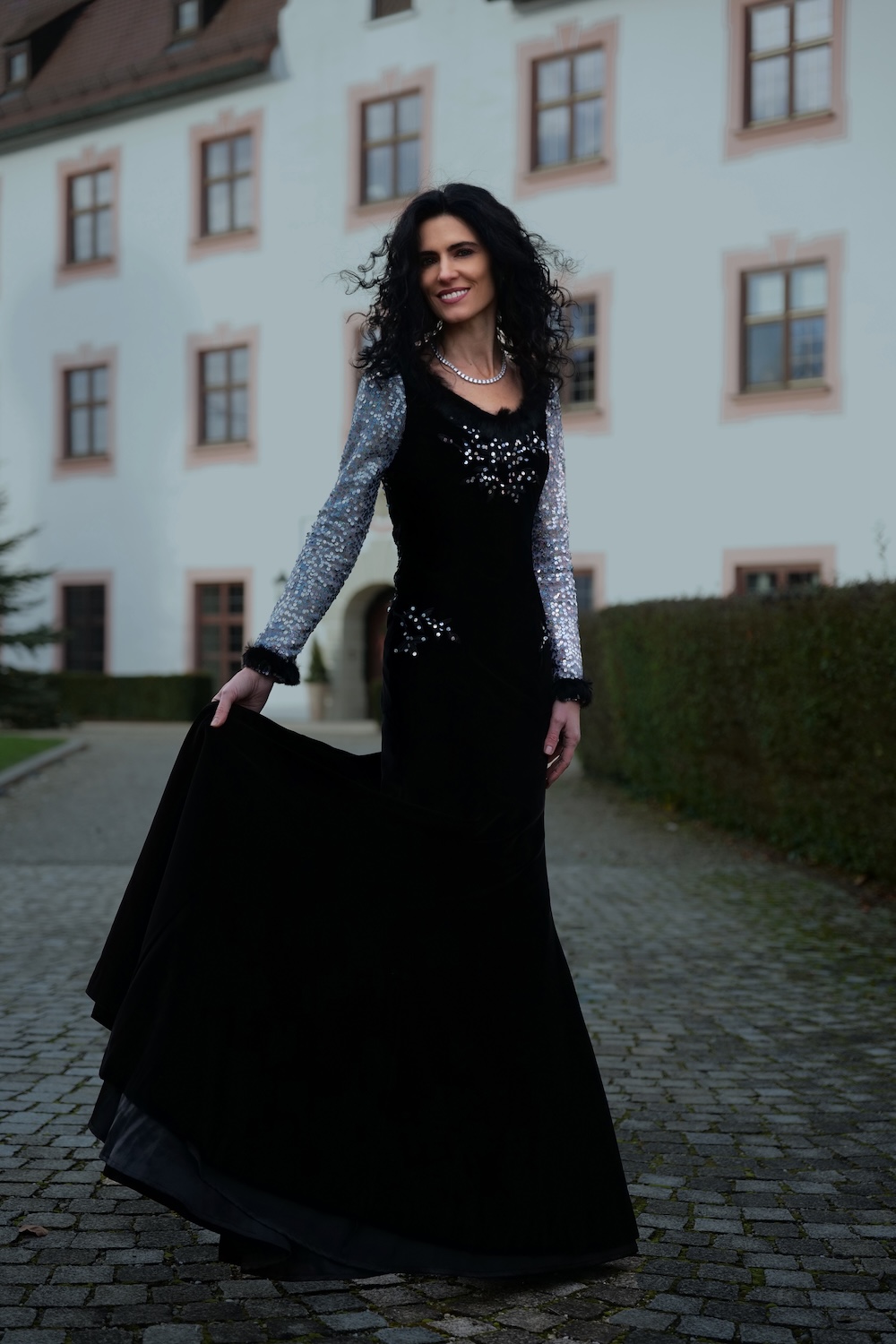 Since making her orchestral debut in 1999 performing Gershwin’s Concerto in F with the Breckenridge Symphony, Katie has appeared in concert throughout the USA, Europe, Canada, the Middle East, Russia and Japan. She has performed with such celebrated conductors as Jiri Belohlavek, Marin Alsop, Grant Cooper, and Lawrence Leighton-Smith, among others, and in such famous halls as the Konzerthaus in Berlin, the Prinzregenten Theatre in Munich, the great hall of the Moscow Conservatory in Moscow, and the Smetana Hall in Prague.
Katie is a recording artist for the Steinway & Sons label and her extensive discography includes solo repertoire from Mozart to Bernstein. Her most recent albums include Heaven & Hell (2025) featuring a program of Mozart and Beethoven recorded at the Beethovenhaus in Bonn, Germany and Mozart Live on Spirio (2024), an all-Mozart program recorded exclusively on the Steinway SPIRIO, the world’s finest high resolution player piano capable of live performance capture and playback. Other releases on the Steinway & Sons label include Once Upon a Time (2022) featuring music of Mozart and Liszt, Appassionata (2020) with music by Beethoven and Classical Gershwin (2019). This CD + DVD set includes an innovative music video of Gershwin’s beloved Rhapsody in Blue which, together with her Debussy CD Clair de lune, was selected by Lufthansa, Swiss Airlines, and Austrian Airlines to be presented on their in-flight entertainment programs on flights all over the world. One of Katie’s most significant recording to date, The Complete Solo Piano Music of Leonard Bernstein, was released by Deutsche Grammophon in 2018 in honor of the 100th anniversary of the composer’s birth, and in 2017 she also recorded an all-Gershwin LP for the Berliner Meister Schallplatten label’s Direct-to-disc format.
In addition to her CD releases, Katie is committed to finding new ways to bring classical music to younger audiences and is collaborating with Colorado Public Radio on a innovative project dedicated to Mozart which combines a recording of the complete sonatas and fantasies live from the historic Schloss Mirabell in Salzburg with a video blog series called Mozart Snapshots in which Katie takes listeners on a journey through the life of Mozart in Salzburg.
In 2020, Katie was featured in the multi-award winning Deutsche Welle documentary A World Without Beethoven in which she discusses Beethoven’s influence on jazz alongside trumpeter Wynton Marsalis. In 2019, she was selected for a collaboration with the Denver Art Museum for the production of a special edition CD entitled Music in Monet’s Time to accompany Claude Monet: The Truth of Nature the largest exhibit of Monet artworks to come to the US in more than two decades. Her recording of Debussy’s beloved Clair de lune accompanied the half million visitors through the exhibit of more than 120 paintings of Claude Monet. She has also appeared on PBS, NPR, ORF, Ö1 (Austria), BR-Klassik (Germany), et al.
Katie was a protégé of Howard Waltz – himself a student of the legendary French pianist Robert Casadesus – and studied with Robert Spillman at the University of Colorado College of Music where she graduated with highest honors. In addition to performing, Katie devotes her time and talent to the support of various humanitarian, medical, and educational causes. Katie is a Steinway artist and was awarded the Classic Superstar 2008 award by the Berliner Salon.
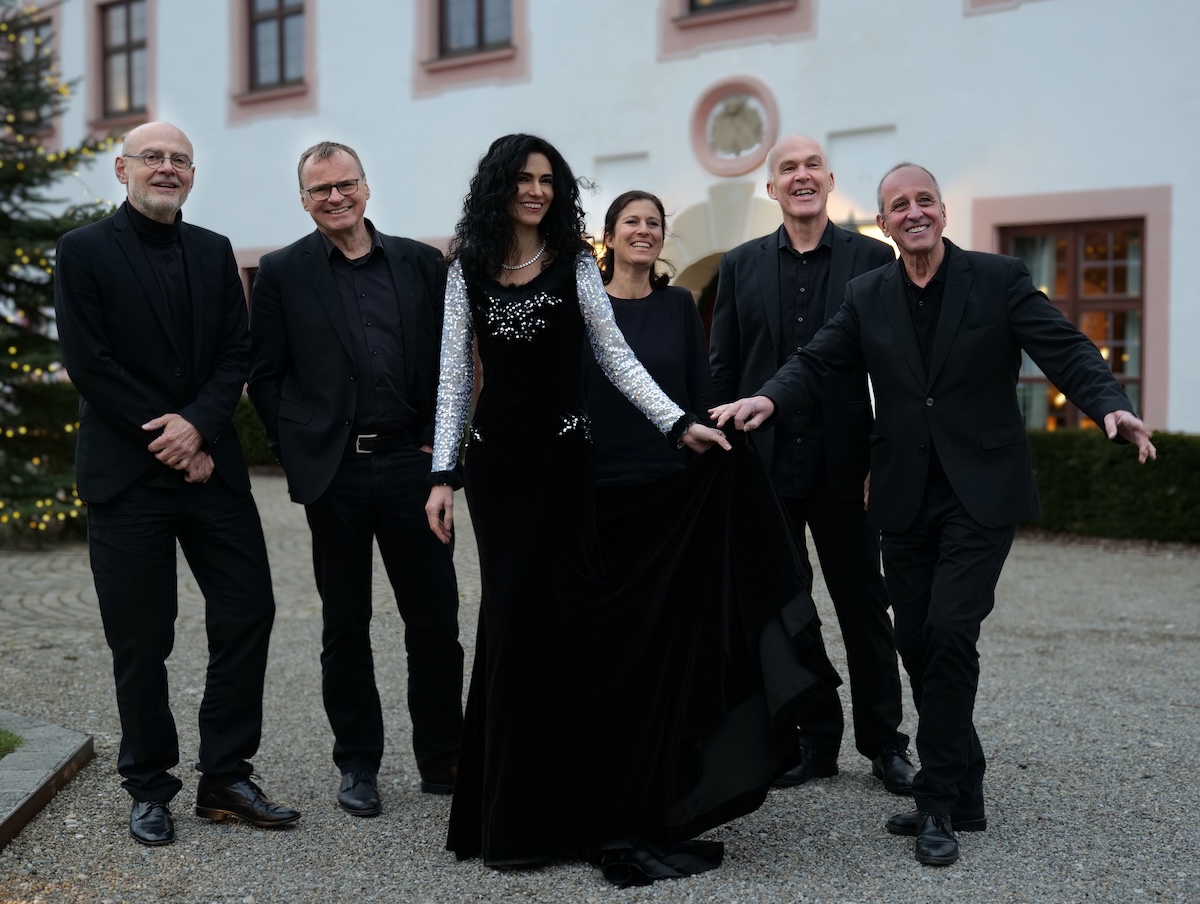
The Mozarteum Quartet, whose origin can be traced back to the 1930s, has traditionally been led by the principal concertmaster of the Mozarteumorchestra Salzburg, on the Initiative of the cofounder of the Salzburg Festival, Bernhard Paumgartner. Thus, since 1998, the quartet has been led by concertmaster Markus Tomasi, who alongside his colleagues Marianne Riehle, violin, Milan Radic, viola and Marcus Pouget, cello, managed to develop his own style and distinctive interpretation of chamber works within a short period.
The Mozarteum Quartet has enthralled numerous audiences at prestigious concert halls and festivals all over the world, including London's Wigmore Hall, Vienna's Konzerthaus, Milan's Scala Verdi. Moscow's Tchaikovsky Conservatory Hall, Prague's Martinù Hall, Tel Aviv's Museum of Art, Barcelona's Palau de la Musica, at music festivals in Beirut, Croatia and Hong Kong, and on tours of Asia and Latin America. In 2004 the quartet established its own annual series at Salzburg's Mozarteum, and in 2006 recorded for Oehms Classic Label.
The quartet specializes in works from the classical period, primarily string quartets of Wolfgang Amadeus Mozart. This repertoire has expanded to include the works of contemporary-particularly Austrian-composers.
The Mozarteum Quartet has collaborated with distinguished musicians such as Jessye Norman, Marjana Lipovsek, Valery Afanassiev, Milan Turkovic, Radovan Vlatkovic and the soloists of Berlin Philharmonic and Vienna Philharmonic.
About Steinway & Sons label
The STEINWAY & SONS music label produces exceptional albums of solo piano music across all genres. The label — a division of STEINWAY & SONS, maker of the world’s finest pianos — is a perfect vessel for producing the finest quality recordings by some of the most talented pianists in the world.

